
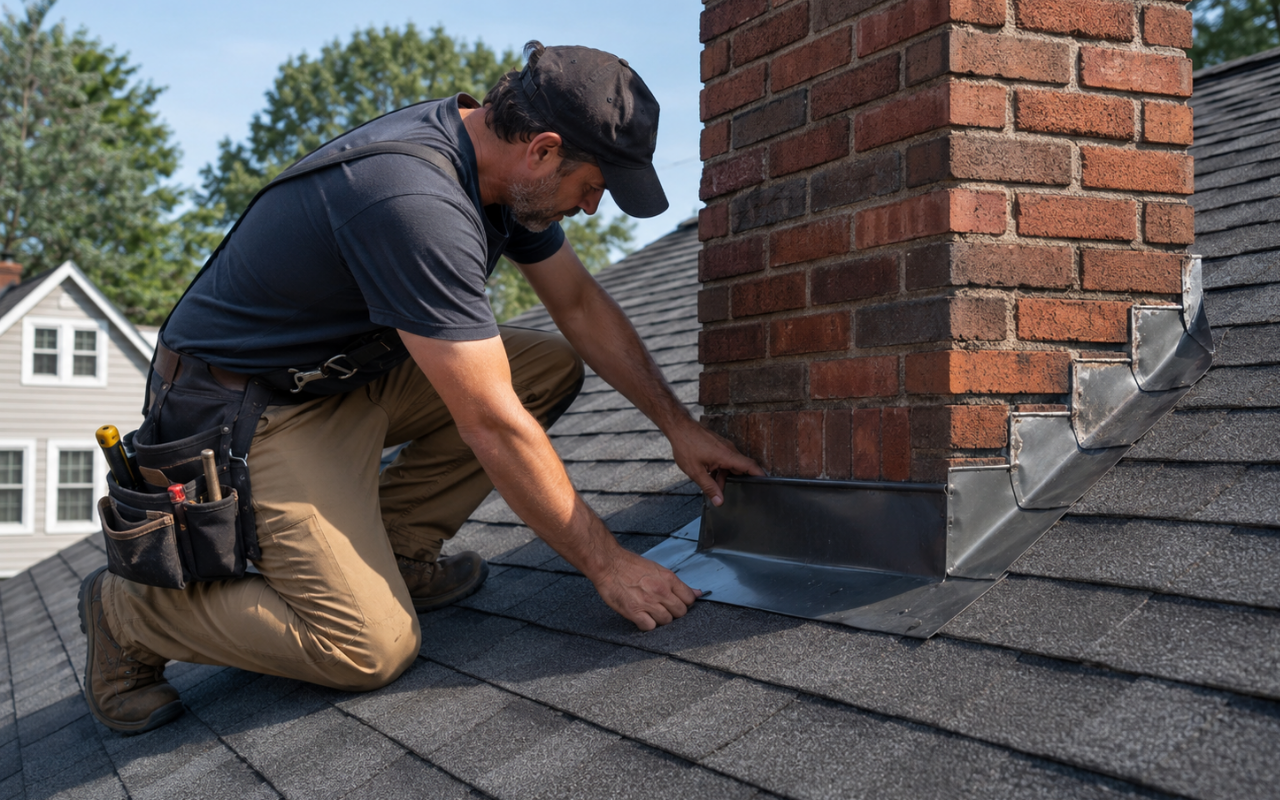
How Can Roof Flashing Repair Protect Your Home Better?
Roof flashing repair restores the waterproof barrier around vulnerable roof areas. First, damaged metal and failed seals are removed. Next, suitable flashing is fitted and secured. Finally, all joints are sealed carefully. As a result, rain moves away from roof openings instead of entering your home.
At Brothers Exterior Corp, we focus on finding the source of the problem before recommending work. Therefore, homeowners receive a repair plan based on the roof’s actual condition.
Regular Flashing Care Prevents Hidden Water Damage Indoors
Flashing protects roof areas where shingles alone cannot stop water. These areas include chimneys, valleys, vents, walls, and roof edges. However, flashing can loosen, crack, rust, or separate as it ages.
Once a gap forms, water can move beneath nearby roofing materials. Then, moisture may reach roof decking, insulation, ceilings, and walls. Although the first signs may seem small, the hidden damage can continue growing.
Regular maintenance offers several important benefits:
- It reduces the chance of indoor water stains.
- It protects wood from moisture and rot.
- It lowers the risk of mold growth.
- It helps roofing materials last longer.
- It can prevent urgent repair needs.
At Brothers Exterior Corp, we believe early action makes home care easier. Therefore, our team checks nearby roofing materials while reviewing the flashing condition.
Common Weather Conditions Weaken Important Roof Seals Over Time
Weather causes many flashing problems. For example, strong winds can lift metal edges or loosen fasteners. Meanwhile, heavy rain can enter small gaps and weaken nearby materials.
Snow and ice can also place pressure on valleys and roof joints. Additionally, repeated temperature changes make metal expand and shrink. Over time, this movement can weaken sealant and create openings.
Other common causes include:
- Leaves and debris holding moisture against metal
- Rust or corrosion on older flashing sections
- Foot traffic during other roof projects
- Loose nails or damaged fasteners
- Poor placement during an earlier installation
- Sealant used as a temporary repair
Valley flashing damage needs special attention because valleys carry large amounts of rainwater. Therefore, even a small opening can affect a wide roof area.
Early Warning Signs Reveal Flashing Problems Before Leaks
Visible water is not always the first warning. Instead, homeowners may notice stains, damp smells, peeling paint, or darker wood inside the attic. Therefore, checking small changes can prevent larger problems.
Common step flashing failure signs include lifted edges, missing pieces, loose overlaps, and gaps beside walls. Moreover, stains below a roof-to-wall connection may point to damaged step flashing.
Chimney flashing issues can appear as cracked sealant, rusted metal, loose counter flashing, or damp areas near the chimney. In addition, white marks on masonry may show repeated moisture exposure.
Look for these warning signs:
- Water stains on ceilings or upper walls
- Damp insulation after heavy rain
- Rust around metal roof joints
- Loose flashing beside chimneys or walls
- Cracked sealant around roof openings
- Shingles lifting near a flashing section
- Musty smells inside the attic
When homeowners contact Brothers Exterior Corp, we explain which signs may indicate active water entry. Then, we review the surrounding roof area for related damage.
Safe Inspection Steps Identify Damage Without Added Risk
A basic inspection can help you notice warning signs. However, climbing onto a roof can be dangerous. Therefore, begin from the ground whenever possible.
Review the roof from a safe location
First, use binoculars to inspect chimneys, valleys, walls, vents, and roof edges. Look for bent metal, loose sections, rust, or missing pieces.
Check the attic after rainfall
Next, enter the attic with a flashlight after a steady rain. Look for drips, damp wood, wet insulation, or dark stains. However, never touch wet electrical parts.
Inspect ceilings and upper walls
Then, check indoor surfaces for rings, peeling paint, soft drywall, or new discoloration. Because water can travel, the visible stain may not sit below the opening.
Avoid unsafe roof access
Finally, do not walk on steep, wet, icy, or damaged roofing. Instead, request a professional inspection when the area cannot be viewed safely.
Our team at Brothers Exterior Corp can examine difficult roof areas without asking homeowners to take unnecessary risks. For broader damage concerns, explore our professional roof care.
Professional Repair Choices Deliver Clearer and Lasting Results
Searching for a flashing repair contractor near me may return many choices. However, the closest option is not always the best match. Instead, look for clear communication, proper insurance, roofing experience, and a written repair plan.
A reliable contractor should inspect more than the visible gap. For example, water may have affected shingles, underlayment, decking, or insulation. Therefore, the full problem must be understood before work begins.
Ask the contractor to explain:
- Where water may be entering
- Which flashing section has failed
- Whether nearby materials need attention
- Which metal and sealant will be used
- How the repair will manage future rain
- What workmanship coverage applies
With Brothers Exterior Corp, you receive clear guidance before the work begins. Moreover, we discuss whether a focused repair or wider roofing service fits the damage.
If your roof needs more than a small correction, review our complete roof planning. Metal roofing concerns can also be explored through our specialized metal roof care.
Simple Chimney Repair Process Restores Strong Water Protection
Chimney areas often use more than one flashing layer. Therefore, a lasting repair must address each part correctly. Surface sealant alone may hide the opening temporarily, but it may not solve the cause.
A professional chimney repair process usually follows these steps:
- Inspect the chimney base and nearby shingles.
- Locate loose, rusted, cracked, or missing metal.
- Remove damaged materials without harming sound sections.
- Check the roof deck for moisture or decay.
- Fit suitable base and step flashing pieces.
- Secure counter flashing against the chimney surface.
- Seal required joints with roofing-grade material.
- Test the completed area for proper water flow.
Because chimney flashing issues can involve masonry and roofing joints, correct placement matters. Furthermore, each layer must direct water onto the next surface.
At Brothers Exterior Corp, we treat sealant as one part of the repair, not the entire solution. Consequently, our goal is to restore proper water movement around the chimney.
Seasonal Maintenance Habits Extend Every Flashing System Lifespan
Simple maintenance can help flashing last longer. First, clear leaves and branches from valleys, chimneys, and roof edges. Otherwise, trapped debris can hold moisture against the metal.
Next, inspect visible sealant for cracks or separation. Also, check for loose fasteners and lifted metal after strong storms. However, avoid pressing or bending flashing during an inspection.
Follow this seasonal routine:
- Check visible roof joints during spring.
- Clear valleys before heavy summer storms.
- Remove leaves during autumn.
- Review attic surfaces after severe rain.
- Request help after wind or falling-branch damage.
In addition, keep gutters clear so water can leave the roof properly. Blocked drainage can force water toward roof edges and vulnerable joints.
Timely Professional Support Keeps Your Entire Roof Secure
Roof flashing repair should address the entry point and any connected damage. Therefore, delaying service can allow moisture to spread beneath otherwise healthy roofing.
A roof leak repair service can inspect flashing, shingles, decking, vents, and other nearby areas. Then, the repair plan can address the complete water path rather than one visible symptom.
At Brothers Exterior Corp, we use our roofing experience to keep the process clear and practical. Additionally, we explain what we find before recommending the next step.
Protect your home before a small opening becomes a larger leak. Contact our team through roofing estimate page to arrange an inspection and discuss your roofing concerns.
Frequently Asked Questions
What does flashing repair usually include?
It usually includes locating the opening, removing damaged materials, checking the surface below, and fitting suitable replacement metal. Additionally, the contractor secures each layer and seals required joints. Learn more about related work through our professional roof care in Prince William County.
Can damaged flashing cause a serious roof leak?
Yes. Even a small gap can guide rain beneath shingles and into the roof deck. Consequently, moisture may damage insulation, ceilings, walls, or wood framing. When wider work becomes necessary, our complete roof planning explains another available roofing solution.
How can I recognize damaged chimney flashing?
Look for cracked sealant, rust, loose metal, damp attic areas, or stains near the chimney. However, water can travel before becoming visible. Therefore, a professional inspection can identify the actual opening. You can arrange help through our contact page.
Should homeowners repair flashing without professional help?
Ground-level checks and indoor inspections are helpful. However, cutting, fitting, and securing flashing requires safe access and correct layering. Poor work can trap water or damage nearby roofing. Metal roof owners can review our specialized metal roof care.
When should flashing receive a professional inspection?
Request an inspection after strong storms, visible movement, indoor stains, or repeated leaks. Also, arrange a review when flashing looks rusted, bent, or separated. At Brothers Exterior Corp, we can inspect the affected area and explain practical next steps through our consultation page.
References:
- FEMA Guide to Checking Roof Flashing
- Department of Energy Guide to Roof Flashing and Water Management