
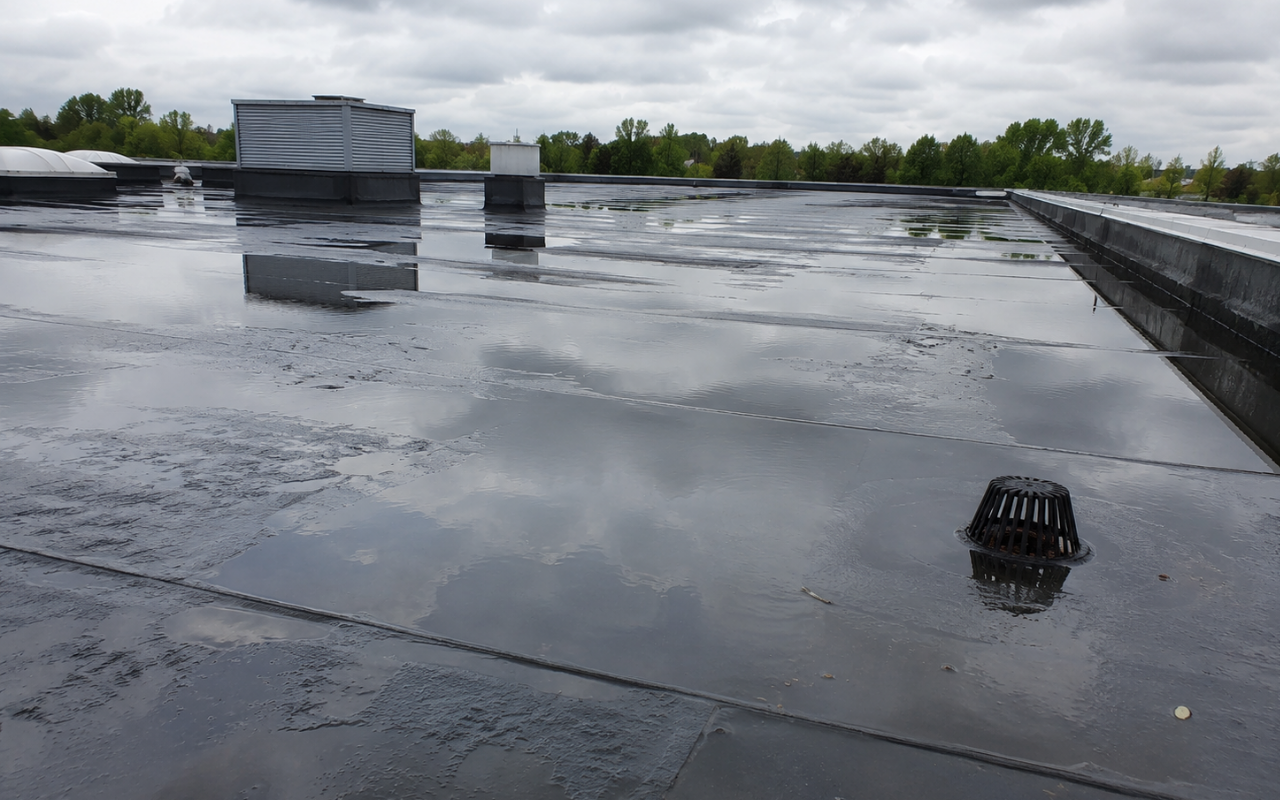
How Can You Prevent Flat Roof Ponding Water
You can prevent flat roof ponding water by clearing drains, checking low areas, repairing damaged materials, and improving the roof slope. Furthermore, regular inspections help find drainage problems before water reaches the insulation or interior. A clear drainage path remains the best defense against repeated pooling.
Water that remains after rain can weaken a flat roof over time. Fortunately, regular checks can prevent larger problems. At Brothers Exterior Corp, we help property owners find drainage issues, protect roof materials, and choose lasting solutions before indoor damage begins.
Recognize Early Signs Before Roof Damage Spreads Further
First, inspect the roof after a strong storm. Water should move toward drains, gutters, or scuppers without long delays. However, shallow pools that remain for two days may show a drainage problem.
Dark marks can also reveal older water buildup. Likewise, algae, dirt rings, and soft areas may show where moisture often collects. Therefore, these signs should never be ignored.
- Water remains long after the rain stops.
- Dark stains surround drains or low areas.
- Algae grows where the surface stays damp.
- The roof feels soft or uneven.
- Indoor ceilings show new water marks.
These drain blockage warning signs often appear before a major leak. At Brothers Exterior Corp, we recommend documenting each problem with clear photos. Then, our team can compare changes and identify the safest next step.
For more local guidance, review drainage problems and practical solutions.
Identify Common Causes Behind Repeated Water Buildup
Several ponding water causes can affect the same roof. For example, leaves may cover a drain after heavy wind. Meanwhile, dirt can slow water near a scupper or gutter.
Low roof areas are another common cause. Over time, insulation may settle and create dips. Also, the roof deck may move slightly under added weight. Consequently, rainwater gathers instead of flowing away.
Poor planning can also create drainage concerns. A drain may sit above the lowest surface. Likewise, equipment may block the natural water path. Therefore, a complete inspection should review the whole drainage layout.
At Brothers Exterior Corp, we look beyond the visible pool. We check the likely source, surrounding seams, drainage outlets, and nearby roof materials. As a result, the repair plan addresses the cause instead of hiding the symptom.
Clear Roof Drains To Restore Faster Water Flow
Regular drain cleaning is one of the simplest prevention steps. First, remove leaves, sticks, dirt, and other loose material. Next, check that water can pass through every opening.
- Clean drains after strong storms.
- Remove debris around scuppers and gutters.
- Check downspouts for slow water movement.
- Keep roof equipment away from drain paths.
- Record areas that clog more often.
After cleaning, pour a small amount of water near the drain. Then, watch how quickly it leaves. Slow movement may point to a deeper blockage. Therefore, avoid forcing tools into hidden drain lines.
A professional flat roof drainage repair may include drain cleaning, resealing, outlet adjustments, or damaged material replacement. With Brothers Exterior Corp, you receive clear guidance before any work begins.
Improve Roof Slope For Reliable Rainwater Runoff
A flat roof is not completely level. Instead, it needs a slight slope that guides rainwater toward drainage points. When that slope becomes uneven, flat roof ponding water can return after every storm.
Several roof slope correction options may improve water movement. However, the right choice depends on the roof structure and existing materials.
- Tapered insulation can create a better water path.
- Crickets can guide water around roof equipment.
- Sumps can direct water toward internal drains.
- New scuppers can create added exit points.
- Deck corrections can repair serious low areas.
Sometimes, a small correction solves the problem. However, widespread settling may require a larger plan. Therefore, an inspection should happen before adding coatings or surface patches.
For drainage-focused replacement planning, explore Installation Planning for Stronger Roof Drainage.
Follow Simple Steps To Check Drainage Safely
Basic observations can help you explain the problem clearly. Nevertheless, roof safety must always come first. Never walk on a wet, icy, damaged, or unstable surface.
- Begin indoors and check ceilings for fresh stains.
- Look from the ground for blocked gutters.
- Wait until the roof surface is dry.
- Mark visible pools without entering unsafe areas.
- Photograph drains, stains, seams, and low spots.
- Check whether water remains after two days.
- Request professional help when pooling returns.
This simple process creates a useful record. Moreover, it helps our team understand when and where the water appears. At Brothers Exterior Corp, we use those details to prepare a focused flat roof inspection service.
Repair Damaged Materials Before Moisture Reaches Indoors
Ponding water can expose weak roof areas. For instance, small cracks may open near seams, vents, flashing, or wall edges. Then, water may move below the visible surface.
Blisters, punctures, and loose seams should receive prompt attention. Otherwise, moisture can reach insulation and ceiling materials. In addition, repeated wetting may make the affected area larger.
Temporary sealant may reduce immediate exposure in some cases. However, it does not correct blocked drainage or poor slope. Therefore, the full repair should address both the damaged surface and water path.
To understand available repair support, visit local repair guidance for damaged roofing.
Schedule Professional Inspections For Clearer Repair Decisions
A professional inspection can reveal problems that are difficult to see. First, we examine drains, gutters, scuppers, seams, and flashing. Next, we review low spots and possible moisture entry areas.
A flat roof inspection service also helps separate minor maintenance from deeper damage. For example, one blocked drain may need cleaning. However, repeated ponding across several areas may require slope improvements.
Our team at Brothers Exterior Corp explains the findings in simple terms. Furthermore, we discuss practical options based on the roof’s condition. This approach helps property owners make informed choices without rushed decisions.
When flat roof ponding water keeps returning, contact us . We can review the roof and recommend a clear next step.
Maintain Seasonal Habits That Support Lasting Roof Protection
Preventive care works best when it follows a steady schedule. Therefore, inspect drainage areas during spring and fall. Also, check the roof after heavy rain, strong wind, or falling leaves.
- Remove seasonal debris from drainage points.
- Trim branches that drop material onto the roof.
- Check seals around vents and wall edges.
- Watch previous ponding areas after storms.
- Keep photos and notes from each inspection.
Protective coatings may support some roof systems. Nevertheless, they cannot replace proper drainage. The surface must already have a clear water path before coating work begins.
At Brothers Exterior Corp, we believe small checks can prevent larger disruptions. Regular care also makes flat roof drainage repair easier to plan. Most importantly, it helps protect the building throughout changing weather.
Frequently Asked Questions
How long can water remain on a flat roof?
Water that remains for about two days may signal poor drainage. Therefore, document the area and check nearby outlets. For related guidance, read drainage problems and practical solutions.
What are the main ponding water causes?
Common causes include blocked drains, settled insulation, low areas, weak slope, and poor drain placement. Moreover, roof equipment may interrupt natural water flow. Learn how routine care reduces these risks in flat roof maintenance tips.
Can I clear a blocked roof drain myself?
You may remove loose surface debris when access is safe. However, do not enter unstable areas or force tools into drain lines. Instead, request a professional roofing assessment when water remains.
Which roof slope correction options work best?
Tapered insulation, crickets, sumps, added scuppers, and deck corrections may improve runoff. However, the right method depends on the existing roof. Review installation planning for stronger roof drainage for more information.
When should I request a professional roof inspection?
Request an inspection after repeated pooling, new ceiling stains, soft areas, or slow drainage. Likewise, schedule help when repairs do not stop the problem. Visit local repair guidance for damaged roofing to explore the next step.
Flat roof ponding water should never become a normal roof condition. Fortunately, early action can protect the surface, insulation, and interior. With Brothers Exterior Corp, you receive straightforward support, careful inspection, and a repair plan built around your property.
References: