
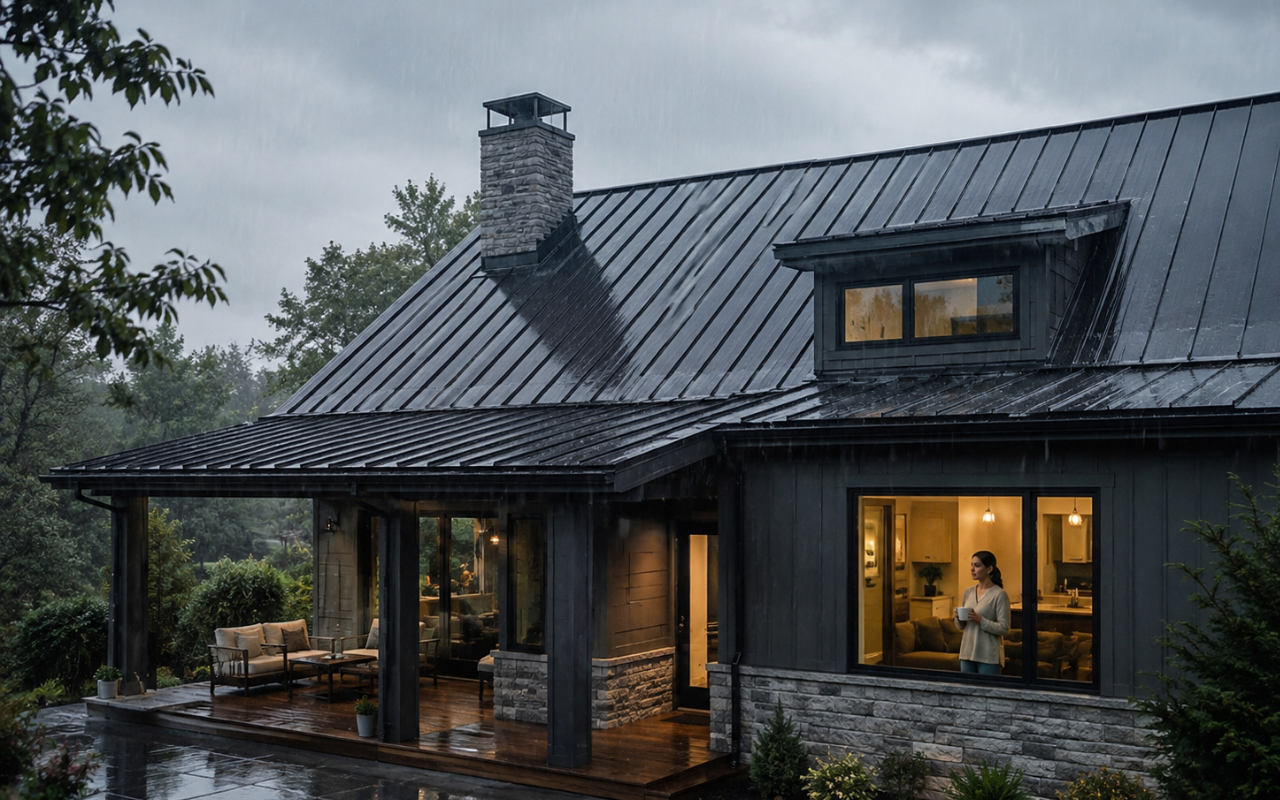
Why Do Metal Roof Noise Myths Persist Today?
Metal roof noise myths persist because many people remember thin metal panels installed over open barns or sheds. However, a modern residential roof works very differently. Solid decking, underlayment, attic space, insulation, and ceilings all help control sound. Therefore, a properly built system should not create the constant drumming many homeowners expect.
Moreover, rain noise depends on the complete roof system rather than metal alone. Strong installation also limits panel movement and unwanted vibration. As a result, homeowners can enjoy durability without giving up indoor comfort.
Modern Roof Assemblies Reduce Rain Sounds Inside Homes
First, modern metal roofs usually sit over a solid roof deck. Therefore, rain does not strike unsupported panels like it does on many barns. Instead, the deck gives the roofing material a firm base.
Moreover, underlayment adds another layer between the metal and the deck. Meanwhile, attic insulation adds more separation between outdoor impacts and indoor rooms. As a result, several materials work together before sound reaches your living space.
However, poorly installed panels can still create unwanted sounds. Loose parts may move during wind, rain, or changing temperatures. Therefore, choosing an experienced metal roofing contractor remains important.
At Brothers Exterior Corp, we focus on the complete roofing system instead of one material. Consequently, homeowners can review our residential installation planning guide before planning their next project.
Attic Insulation Absorbs Sound Before It Reaches Rooms
Next, attic insulation and noise control work together in a finished home. Insulation slows heat movement, but it can also absorb some airborne sound. Therefore, a well-insulated attic creates another barrier between roof impacts and occupied rooms.
Moreover, the condition and amount of insulation can affect the result. Thin, damaged, or missing insulation may allow more outdoor sound to enter. Therefore, homeowners should consider the attic when investigating roof noise.
- First, check whether attic insulation covers the space evenly.
- Next, look for open areas where sound may travel more easily.
- Also, inspect for moisture before adding new insulation.
- Finally, ask a professional whether the current setup supports your comfort goals.
At Brothers Exterior Corp, we can review roofing conditions that may contribute to unwanted sound. Furthermore, homeowners searching for a metal roof consultation near me can schedule a roofing consultation with our team.
Quality Underlayment Softens Impact Noise Beneath Metal Panels
Furthermore, underlayment sound reduction can make an important difference beneath metal panels. Underlayment creates separation between the roof covering and the deck. Therefore, it can help reduce vibration while supporting the overall roofing assembly.
However, the material must also be installed correctly. Wrinkles, gaps, damaged areas, or weak seams may reduce its performance. Consequently, careful preparation matters before the metal panels go into place.
- First, the roof deck should be clean, dry, and stable.
- Next, underlayment should cover the required roof areas evenly.
- Then, seams and overlaps should follow the roofing system requirements.
- Finally, roof openings need careful attention around flashing and edges.
At Brothers Exterior Corp, we consider these hidden layers during installation planning. Therefore, our metal roofing project guidance can help homeowners understand the installation process.
Traditional Roofing Comparisons Reveal Why Context Matters Most
Meanwhile, comparing roofing materials requires more than listening to rain on one exposed panel. Asphalt shingles have a different surface and may soften impact sounds naturally. However, the complete building structure still affects what people hear indoors.
Similarly, a residential metal system contains layers that an open shed may not have. Therefore, comparing a finished home with an unfinished structure creates a misleading picture.
The why metal roofs sound louder myth often comes from this difference. People may remember rain hitting exposed metal without decking, insulation, or interior ceilings. However, that experience does not represent every modern residential installation.
Moreover, metal roof noise myths should not replace an evaluation of the actual home. Roof design, attic construction, panel attachment, underlayment, and insulation all matter. Consequently, two homes with metal roofing can have very different sound levels.
Simple Installation Steps Keep Metal Roofing Comfortably Quiet
Therefore, a quieter roofing system begins before the first panel is secured. Careful preparation helps control movement, gaps, and other conditions that may create unwanted noise. Additionally, each roofing layer should work with the next one.
- First, inspect the roof deck and repair weak areas.
- Next, install the correct underlayment across the prepared deck.
- Then, review attic insulation and ventilation conditions.
- Afterward, place panels with the correct alignment and attachment method.
- Next, complete flashing carefully around roof openings and transitions.
- Finally, inspect the finished system for loose or poorly secured areas.
At Brothers Exterior Corp, we believe careful workmanship supports both protection and comfort. Therefore, homeowners can use our professional installation information when preparing for a new roofing project.
Routine Roof Care Prevents New Noise Problems Later
Additionally, even a well-installed roof benefits from regular care. Fasteners, seams, flashing, and surface coatings can change as the roof faces weather. Therefore, inspections can identify small concerns before they become larger problems.
For example, a loose component may move during strong wind. Similarly, damage near a seam may create vibration or allow water into the roof system. Therefore, unusual new sounds deserve attention, especially after severe weather.
At Brothers Exterior Corp, we encourage homeowners to address changes early. Moreover, our seasonal roof care guide explains useful maintenance steps.
However, repairs should not be delayed when leaks or visible damage appear. In that case, homeowners can review our local repair planning resource for additional guidance.
Professional Guidance Clarifies Which Noise Solutions Fit Best
Finally, the best sound-control approach depends on the home. Some properties may already have good insulation but need roofing repairs. Meanwhile, others may benefit from improved underlayment during a new installation.
Therefore, a professional evaluation can identify which part of the system deserves attention. A qualified metal roofing contractor can inspect panels, seams, attachment points, decking, and related roof conditions.
Moreover, homeowners should avoid assuming every rain sound means the roof has a problem. Some sound during heavy weather is normal for many roofing materials. However, sudden rattling, movement, or new sounds may justify an inspection.
With Brothers Exterior Corp, you can discuss your concerns before deciding on the next step. Therefore, a professional roof evaluation can help you separate normal weather sounds from issues needing attention.
Ultimately, metal roof noise myths should not stop homeowners from considering modern metal roofing. With proper design and workmanship, the complete roof system can remain comfortable during ordinary rain. Consequently, good attic insulation and noise control, correct underlayment, and secure installation all support a calmer indoor space.
Frequently Asked Questions
Are metal roofs always loud when it rains?
No. Instead, the sound depends heavily on what sits beneath the metal panels. Solid decking, underlayment, attic space, and insulation can all reduce transmitted sound. Therefore, metal roof noise myths often describe exposed or poorly built systems rather than finished homes. For planning help, review our home installation planning resource.
Can attic insulation make a metal roof quieter?
Yes. In addition, attic insulation can absorb some sound before it reaches occupied rooms. However, results depend on the existing attic and complete roof assembly. Therefore, homeowners should review both roofing and insulation conditions. At Brothers Exterior Corp, we can discuss those concerns through our roof consultation request page.
Does underlayment reduce rain noise under metal roofing?
Yes. Underlayment can help reduce vibration and impact sound within the roof system. Moreover, proper installation matters because gaps or poor placement can reduce its effectiveness. Therefore, underlayment sound reduction should be considered together with decking and insulation. For ongoing care, review our metal roofing maintenance information.
Can an older metal roof become noisier over time?
Yes. New sounds can sometimes develop when roofing parts loosen, shift, or experience weather damage. Therefore, unusual rattling or movement should not be ignored. Regular inspections can help identify the cause earlier. You can also explore our roofing services to learn more about available support.
When should homeowners request professional help for roof noise?
Request help when noise suddenly changes, panels appear loose, or leaks occur. Additionally, get help when you cannot safely identify the cause. A professional inspection can separate normal rain sounds from repair concerns. Therefore, review our professional repair guidance for possible next steps.
References:
How Much Does Metal Roofing Cost – Forbes Home
Metal Roofs 101: Installation & Material Types – This Old House