
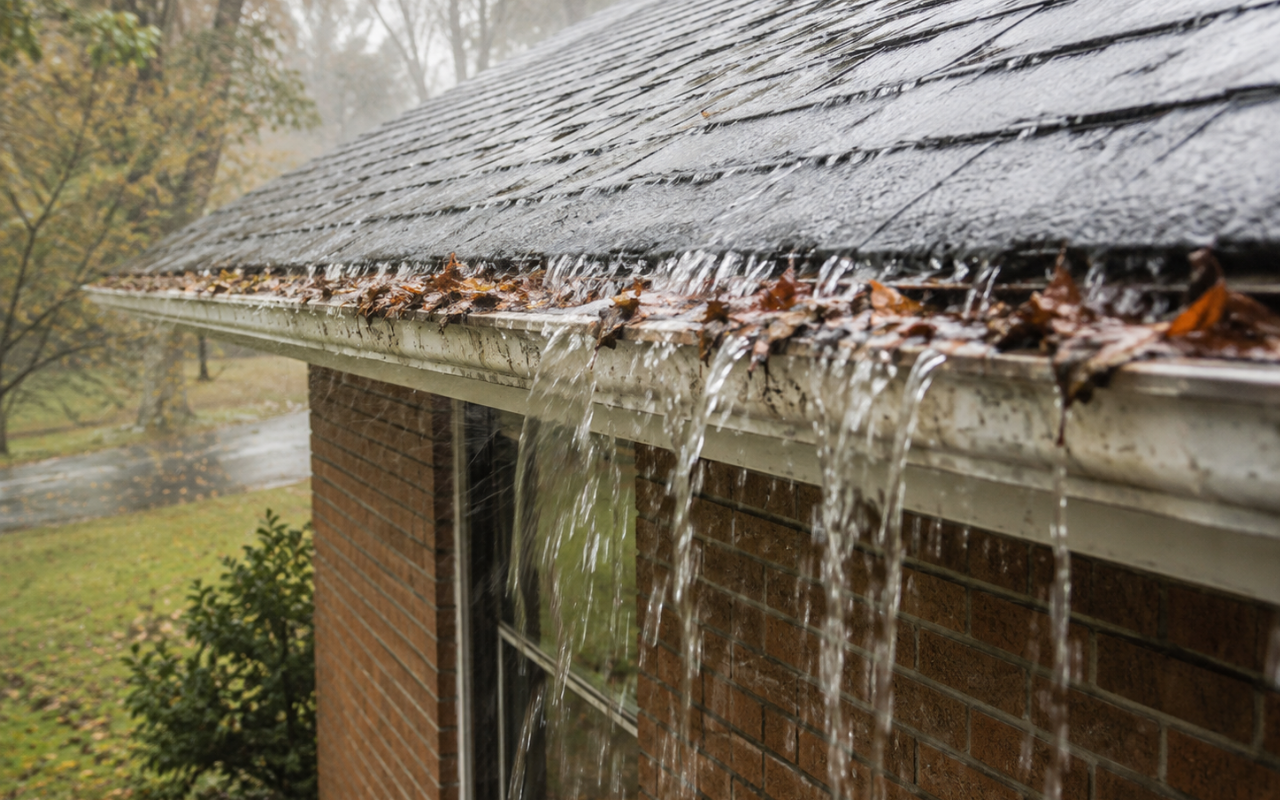
How Can You Stop Roof Gutter Overflow Problems?
You can stop roof gutter overflow problems by keeping gutters clear, checking downspouts, and correcting damaged or poorly draining sections. Additionally, regular inspections help you catch small problems before heavy rain arrives. If overflow keeps returning after cleaning, the gutter size, slope, fasteners, or roof drainage pattern may need professional attention.
Spot Early Warning Signs Before Water Causes Damage
First, watch your gutters during moderate rain whenever it is safe to do so. Water should move toward the downspouts without spilling over the front edge. However, repeated overflow usually means something is limiting normal drainage.
Also, several clogged gutter warning signs can appear even when rain is not falling. Therefore, checking the roofline from the ground can reveal useful clues.
- Look for leaves, twigs, dirt, or plants inside visible gutter sections.
- Notice water stains along siding, fascia, or exterior walls.
- Check for sagging gutters or sections pulling away from the roofline.
- Watch for puddles forming near the foundation after rainfall.
- Look for damp areas beneath roof edges or around exterior trim.
In addition, overflow damage to roof edge areas can develop when water repeatedly escapes behind or above the gutter. Therefore, early inspection can reduce the chance of damaged wood, staining, and leaks.
At Brothers Exterior Corp, we encourage homeowners to review their exterior after strong weather. For additional guidance, explore our storm roof repair guidance.
Understand How Overflow Can Harm Your Home Exterior
Next, consider where overflowing water travels after leaving the gutter. Because gutters guide rain away from the home, poor drainage can affect several exterior areas.
For example, water may run across fascia boards and exterior trim. Consequently, repeated moisture can support rot or surface damage. Water may also wash across siding and leave stains.
Meanwhile, uncontrolled runoff can land beside the foundation. As a result, soil may become heavily saturated during repeated storms. Landscaping can also wash away where water falls from the roof edge.
Furthermore, backed-up water can remain near the roofline. Although every situation differs, this moisture may increase the risk of problems around vulnerable roofing materials.
At Brothers Exterior Corp, we look at the roof and surrounding exterior as connected parts. Therefore, proper drainage supports more than clean gutters. It also helps protect the areas below them.
Prevent Common Blockages With Simple Seasonal Gutter Care
Fortunately, routine maintenance can prevent many roof gutter overflow problems. Leaves, pine needles, dirt, and small branches can gradually restrict water movement. Therefore, seasonal cleaning is especially important around homes with nearby trees.
Additionally, nests and other organic material can create downspout blockage issues. Even a partly blocked opening can slow drainage during strong rainfall.
For better prevention, include these simple tasks in your maintenance routine:
- Remove visible leaves and debris from accessible gutter sections.
- Check gutter openings after periods of heavy leaf fall.
- Trim branches that regularly drop debris onto the roof.
- Inspect joints, corners, hangers, and visible seals for damage.
- Confirm that water can enter each downspout without obstruction.
Moreover, regular roof care can help you notice drainage concerns earlier. Our seasonal roof maintenance tips explain other simple ways to protect your exterior.
At Brothers Exterior Corp, we recommend consistent checks instead of waiting for visible damage. Therefore, small maintenance steps can support reliable drainage throughout the year.
Inspect Downspouts Carefully To Keep Rainwater Moving Away
Next, inspect the downspouts because clear gutters still need an open exit. A blockage inside an elbow can cause water to back up quickly.
Therefore, look for dents, loose connections, or sections that appear crushed. Also, check whether debris is packed around the top opening.
If accessible safely, flushing the system with water can show whether drainage is moving normally. However, stop if water backs up or if reaching the area requires unsafe ladder use.
Additionally, check where the downspout releases water. Runoff should move away from the structure instead of collecting beside the foundation.
At Brothers Exterior Corp, we consider drainage direction an important part of exterior protection. When summer storms are approaching, our summer roof preparation guide can help you prepare other vulnerable areas.
Follow These Steps To Reduce Overflow During Storms
A simple how-to check can help you find basic drainage problems before the next storm. However, always place personal safety first. Avoid roof access when surfaces are wet, steep, or difficult to reach.
Simple Steps for Checking Gutter Flow
- First, inspect visible gutter sections from a safe position on the ground.
- Next, remove accessible debris using appropriate gloves and tools.
- Then, examine the downspout openings for leaves or packed material.
- Afterward, test water flow through accessible sections with a garden hose.
- Finally, watch where discharged water travels near the home.
If water still spills over, the cause may be more than ordinary debris. For example, the gutter may sag or drain in the wrong direction.
Additionally, heavy rain can expose systems that cannot move water efficiently. Therefore, repeated overflow deserves closer attention instead of repeated surface cleaning.
At Brothers Exterior Corp, we can review the surrounding roof and drainage conditions when homeowners need clearer answers.
Opt for Professional Support When Overflow Returns After Cleaning
Sometimes, cleaning does not solve roof gutter overflow problems. Therefore, persistent leaks, sagging sections, loose hardware, or repeated backups may require professional evaluation.
A gutter repair service can identify visible damage and determine whether sections need correction. Additionally, a professional can check whether the gutter alignment supports steady water movement.
You may also search for a roof drainage inspection near me when the cause remains unclear. However, choosing a local exterior team can make the next steps easier to understand.
For example, continued overflow after several cleanings may point to poor gutter slope. Likewise, an undersized drainage path can struggle during heavy storms.
At Brothers Exterior Corp, we explain what we find before recommending the next step. Therefore, if overflow keeps returning, you can request an exterior drainage assessment from our team.
Maintain Strong Drainage Habits Through Every Changing Season
Finally, a regular routine can keep drainage problems from becoming emergencies. Therefore, check gutters during spring and fall, plus after major storms.
Also, pay attention to changes around the roofline. New stains, loose sections, or unexpected pooling can signal developing trouble.
Meanwhile, keep nearby branches trimmed when practical. This step can reduce the amount of leaves and small debris reaching the gutters.
Furthermore, check downspout discharge areas after heavy rain. Water should move away instead of settling beside walls or foundations.
At Brothers Exterior Corp, we believe prevention begins with simple observation and timely maintenance. With consistent care, your gutter system can move water more effectively and protect surrounding exterior areas.
Frequently Asked Questions
What causes gutters to overflow during heavy rain?
Usually, debris, blocked downspouts, poor slope, or limited drainage causes water to spill over. Therefore, start by checking for visible obstructions. If the problem follows severe weather, review our post-storm roof inspection advice for related warning signs.
How often should homeowners check their gutters?
Generally, checking them during spring and fall is a practical starting point. However, homes near many trees may need more frequent attention. For broader exterior care, follow our home roof maintenance recommendations throughout the year.
Can a blocked downspout cause gutter overflow?
Yes. A blocked downspout can prevent collected rainwater from leaving the gutter quickly enough. As a result, water may back up and spill over. You can also review our available exterior service options for information about gutter-related work.
Should gutters be checked before summer storms?
Yes. Checking drainage before storm season can reveal debris, loose sections, and other visible concerns. Therefore, preparing early can reduce surprises during heavy rain. Our warm weather roof preparation advice covers additional seasonal steps.
When should I call someone about recurring overflow?
Call for help when cleaning does not stop the overflow or when you notice sagging, leaks, or roof-edge damage. Therefore, professional inspection can clarify the cause. When you are ready, reach our exterior team to discuss the problem.
References:
Better Homes & Gardens — How to Clean Gutters
This Old House — How To Clear Gutters in a Few Simple Steps