
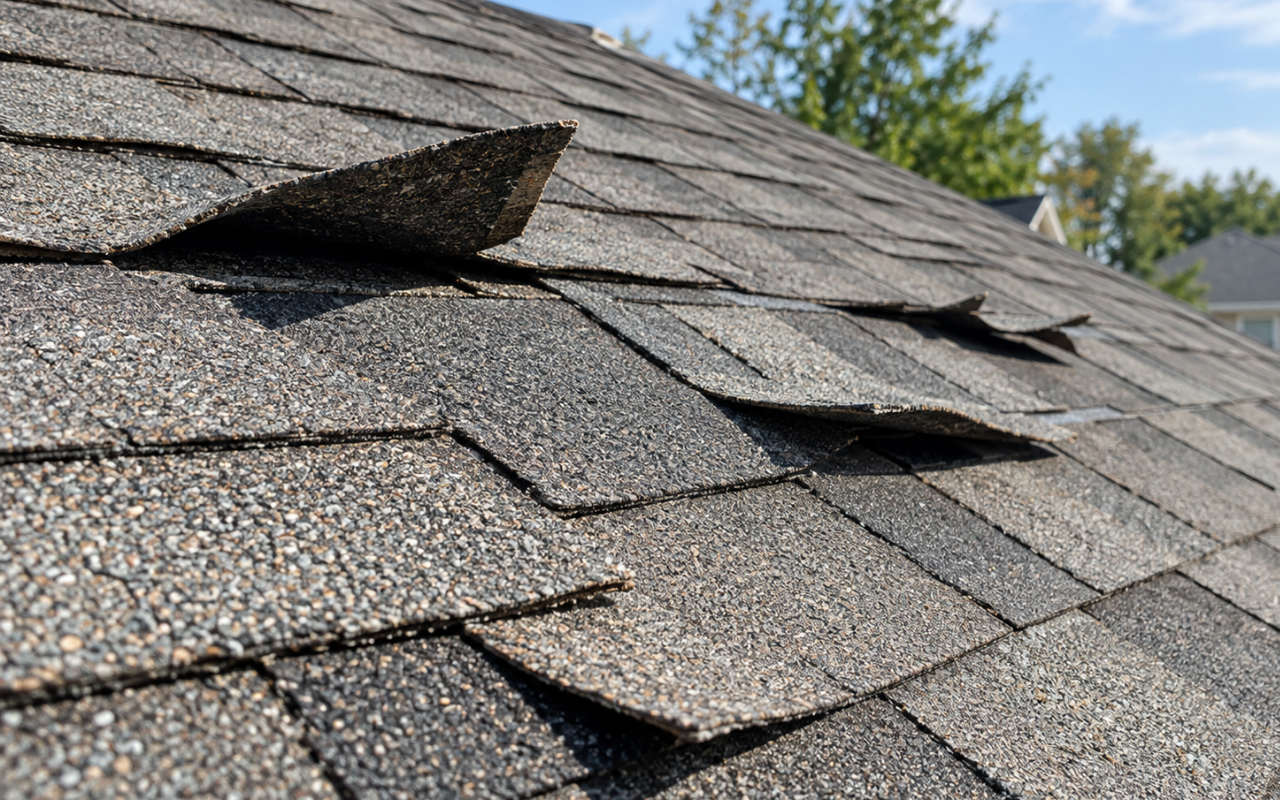
What Shingle Lifting Causes Can Damage Your Roof?
Lifted shingles can expose your roof to wind, rain, and leaks. Therefore, knowing the main warning signs can help you act early. At Brothers Exterior Corp, we look for installation problems, weather damage, aging, and weak seals.
Common shingle lifting causes include strong wind, poor nailing, aging materials, weak adhesive seals, and repeated heat changes. Loose edges can also let rain reach lower roof layers. Therefore, early checks matter. A small lifted area may need focused repair. However, wider damage may point to a larger roof problem that needs professional review.
Recognize Early Shingle Lifting for Better Roof Protection
First, look at your roof from the ground after heavy wind or rain. Lifted shingles may appear raised, uneven, or partly separated. Missing shingles can also leave dark roof areas exposed.
At Brothers Exterior Corp, we check nearby shingles because one loose edge may not be the only concern. We also look for nail movement, broken seals, and water entry. If you already see moisture indoors, our shingle roof leak repair guidance explains common warning signs and safe next steps.
- Look for raised or uneven shingle edges.
- Notice shingles that move during strong wind.
- Check ceilings and attic areas for stains.
- Watch for loose granules near downspouts.
- Review flashing around vents and chimneys.
Prevent Wind Damage With Stronger Shingle Attachment Practices
Wind-lifted shingles often start where an edge or tab is already loose. Then, moving air can push under that section. As the edge rises, more surface can catch the wind. Therefore, the shingle may crease, tear, or separate.
Improper shingle nailing can also weaken attachment. For example, nails placed too high may not hold the correct part of the shingle. Likewise, under-driven nails may leave raised spots. Over-driven nails can damage the shingle surface or reduce holding strength.
Proper fastening should follow the roofing system and manufacturer guidance. Our team at Brothers Exterior Corp also checks whether nearby shingles show the same pattern.
- Use the correct fastener location for the shingle system.
- Keep nails seated correctly without tearing the material.
- Check lifted areas after strong storms.
- Replace badly creased or torn shingles when needed.
- Keep roof edges and flashing in sound condition.
For broader installation information, review our roof installation planning guide. It explains key steps that support a stronger roofing system.
Compare Curled and Lifted Shingles for Clearer Decisions
Curled vs lifted shingles can look similar from the ground. However, they often point to different problems. Curled shingles usually bend at the corners or edges. Aging, sun exposure, and material wear can contribute to that shape.
Lifted shingles usually sit above their normal position. Wind, loose fasteners, weak seals, or installation errors may be involved. Therefore, the pattern matters. One raised tab after a storm may differ from wide curling across an older roof.
Also, granule loss can appear with aging shingles. Our asphalt shingle granule loss guide explains what bald areas and gutter buildup may mean. At Brothers Exterior Corp, we consider these signs together.
As a result, a visual difference can help guide the next inspection.
Follow Simple Steps for Safe Lifted Shingle Repair
Lifted shingle repair should begin with a careful check, not a quick patch. First, stay off wet, steep, or unstable roof surfaces. Then, inspect visible areas from the ground. If the roof is unsafe, a trained roofer should handle the closer review.
- First, note where shingles look raised, missing, or uneven.
- Next, check the attic for stains, damp wood, or wet insulation.
- Then, look for nearby nail movement, flashing damage, or debris.
- Afterward, decide whether the damage appears isolated or widespread.
- Finally, arrange professional repair when safe access or diagnosis is uncertain.
A small repair may involve replacing damaged shingles and correcting fasteners. However, sealant alone may not fix a torn shingle. Therefore, an asphalt roof repair service should address the real cause.
If the same area keeps failing, compare repair and replacement choices in our roof repair and replacement guide.
Maintain Roof Strength Through Regular Checks and Care
Regular care can reduce many shingle lifting causes. Therefore, clear gutters so water can move away from roof edges. Also, remove debris before it collects on the roof. Trim nearby branches when they can scrape or drop debris onto shingles.
Meanwhile, watch attic moisture and ventilation. High heat and moisture can affect roofing materials over time. Repeated heating and cooling may also weaken already loose areas.
With Brothers Exterior Corp, you can discuss visible roof changes before deciding on the next step. If you are unsure what you are seeing, share your roofing concern with our team.
Most importantly, avoid waiting for an indoor leak. Early attention can make lifted shingle repair simpler and reduce exposure to water.
Choose Professional Support for Serious Shingle Roof Damage
Some problems need more than routine maintenance. For example, several missing shingles can expose a larger roof area. Active leaks, spreading stains, or storm damage also need faster attention.
When homeowners call Brothers Exterior Corp, we review the visible damage and surrounding roof area. Therefore, we can look for patterns linked to wind-lifted shingles, poor seals, or improper shingle nailing.
If strong weather has opened the roof, our emergency roof repair information explains when damage may need urgent attention. Not every lifted shingle means full replacement. A focused inspection can help separate a local problem from wider roof wear.
At Brothers Exterior Corp, our goal is to explain the condition clearly. As a result, you can choose the next step with better information.
Frequently Asked Questions
What usually causes asphalt shingles to lift?
Strong wind, weak seals, poor fastening, aging, and temperature changes can all contribute. Therefore, the exact cause depends on the damage pattern. For leak-related signs, review our guide to shingle roof leak warning signs.
Can granule loss make lifted shingles more concerning?
Yes, heavy granule loss can show surface wear or aging. Also, worn shingles may become more open to cracking. Our guide to asphalt roof surface wear explains common signs to watch.
Should I repair or replace several lifted shingles?
The answer depends on roof age, damage size, and leak history. Therefore, repeated problems may need a broader solution. Our repair versus replacement decision guide can help you compare those factors.
When do wind-lifted shingles need urgent attention?
Urgent help may be needed when shingles are missing, water is entering, or roof areas are exposed. Therefore, review our urgent roof damage guidance when storm damage creates immediate concerns.
What happens when lifted shingles cannot be repaired?
Widespread damage may make replacement more practical than repeated repairs. However, the roof should be inspected first. Our shingle roof replacement planning guide explains the main replacement steps.
Understanding shingle lifting causes helps you respond before damage spreads. Therefore, check for raised edges, nail problems, missing shingles, and indoor moisture. At Brothers Exterior Corp, we focus on clear inspection and practical next steps.
References:
- Saffir-Simpson Hurricane Wind Scale — National Hurricane Center
- Far from where Hurricane Milton’s eye hit, tornadoes wrought unexpected damage — AP News