
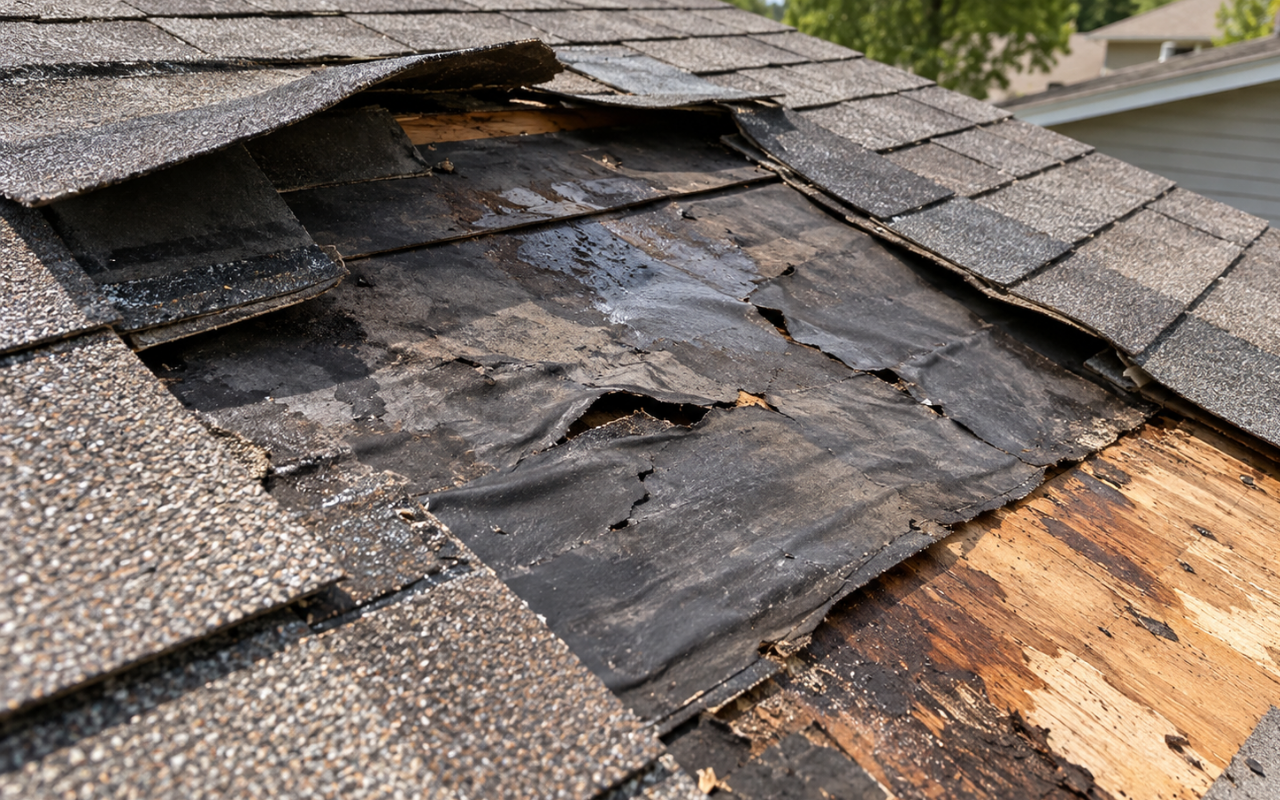
What Causes Roof Underlayment Damage and Prevents Costly Leaks?
Roof underlayment damage usually starts after water passes worn, lifted, or missing roofing materials. Storms, poor installation, aging, and trapped moisture can also weaken this hidden layer. Therefore, finding the cause early matters. At Brothers Exterior Corp, we inspect the roofing system together because shingles, flashing, decking, ventilation, and underlayment must work as one protective system.
Recognize Early Warning Signs Before Hidden Damage Spreads
Because underlayment stays beneath the roof covering, homeowners rarely see it directly. However, the house can show clear damaged underlayment signs. Water stains, damp attic materials, or mold may point to moisture entering through roofing layers. Likewise, peeling ceiling paint or bubbling drywall can signal a leak that already moved indoors.
Outside, damaged or missing shingles can expose lower roofing layers. Therefore, check the property after strong wind, hail, or falling branches. Common warning signs include:
- Water stains on ceilings, walls, or attic wood.
- Damp insulation or a musty smell in the attic.
- Missing, lifted, cracked, or badly curled shingles.
- Visible mold, dark roof-deck areas, or softened wood.
- Repeated leaks near vents, chimneys, valleys, or roof edges.
However, moisture can travel before becoming visible indoors. Therefore, if you are unsure what a stain means, share what you are seeing with our team.
Compare Underlayment Materials Before Planning Your Roof Project
The synthetic vs felt underlayment choice affects durability, handling, and moisture resistance. Felt has a long history in roofing, while synthetic products use manufactured materials. However, the right choice depends on the roof design, local conditions, covering, and installation requirements.
- Felt: a traditional option that can provide secondary protection when correctly installed.
- Synthetic: generally lighter and more resistant to tearing during normal installation work.
- Self-adhering membranes: often protect vulnerable areas where added water resistance is needed.
Therefore, material choice should consider roof slope, deck condition, weather exposure, and the final covering. At Brothers Exterior Corp, we review these parts together. Homeowners can also review roofing materials for your home before planning a project.
Inspect Roof Layers Safely After Leaks Or Storms
A simple ground-level and attic check can reveal possible underlayment water damage. However, homeowners should avoid walking on a wet, steep, or damaged roof. Instead, start where conditions are safer and easier to observe.
- First, check ceilings and upper walls for new stains or damp spots.
- Next, inspect attic insulation and visible decking for moisture or discoloration.
- Then, look from the ground for missing, lifted, or damaged shingles.
- Also, note problems near chimneys, vents, valleys, and roof edges.
- Finally, arrange a professional inspection when signs suggest hidden damage.
During replacement work, removing old shingles also creates a chance to inspect the deck and install new underlayment correctly. Therefore, our shingle replacement steps explain how these layers fit into the larger process.
At Brothers Exterior Corp, we also consider installation quality because poor overlaps or weak fastening can allow moisture to move below the roof covering. Therefore, choosing a qualified roofing installation contractor matters when hidden layers need repair or replacement.
Choose Professional Replacement When Repairs Cannot Protect Longer
Minor damage may affect only a limited area. However, widespread moisture, torn material, or damaged decking can make roof underlayment replacement the better approach. The decision should follow a full roof assessment.
For example, repeated leaks may show that water has reached more than one roofing layer. Likewise, older underlayment can become weak after long exposure to heat, moisture, or movement. Therefore, simply covering a visible symptom may leave the main cause in place.
At Brothers Exterior Corp, we look at the roof as a complete system before discussing repair or replacement. If a larger project is needed, our roof installation guidance in Stafford explains deck evaluation, underlayment, shingles, flashing, ventilation, and final checks.
Professional help also reduces safety risks. Roof surfaces can become slippery or weak. Therefore, homeowners should avoid major repairs without proper training and equipment.
Prevent Future Moisture Problems With Simple Roof Care
Prevention starts with regular observation after severe weather. Although underlayment stays hidden, the roof covering gives clues about conditions below. Therefore, maintaining shingles, flashing, gutters, and roof edges reduces moisture risks.
- Check the roof from the ground after major storms.
- Keep gutters clear so water can move away freely.
- Address missing or lifted shingles before leaks develop.
- Watch attic areas for new moisture, stains, or odors.
- Arrange inspections when damage returns in the same location.
In addition, good installation supports long-term protection. Underlayment needs correct placement, overlap, fastening, and compatibility with the roofing system. Therefore, roof underlayment damage can grow when small installation errors create moisture paths. At Brothers Exterior Corp, our goal is to identify these risks before they create avoidable interior damage.
Protect Your Home By Acting Before Damage Grows
Roof underlayment damage can stay out of sight, but its warning signs should not be ignored. Therefore, early checks after leaks or storms can help protect the roof deck and interior spaces. Water stains, damaged shingles, damp attic materials, and repeated leaks all deserve closer attention.
Moreover, the right solution depends on the condition of the full roof. Sometimes a focused repair is enough. However, extensive moisture or deteriorated material may require roof underlayment replacement. With Brothers Exterior Corp, you can discuss the condition of your roof and understand practical next steps without guessing about hidden layers.
Frequently Asked Questions
How do I know when underlayment needs replacement?
Underlayment may need replacement when leaks repeat, material is torn, moisture has spread, or the roof deck shows damage. However, shingles usually must be removed to confirm the full condition. Our guide to replacing shingles shows where underlayment inspection and installation fit within a full roofing project.
Can a small damaged area be repaired safely?
Sometimes a limited area can be repaired when the surrounding roof remains sound. However, the correct approach depends on moisture spread and the condition below the covering. You can review our professional roofing services to understand the repair and replacement support available.
A trained roofing professional should inspect hidden layers when leaks, storm damage, or aging suggest deeper problems. Therefore, the inspection should consider decking, flashing, ventilation, shingles, and underlayment together. Our Stafford roof installation process explains how these parts are reviewed during project planning.
What should I do after a storm leak?
First, stay away from unsafe roof areas and protect indoor belongings from active water. Next, document visible damage from a safe place. Then, arrange an assessment because storm damage can affect several roofing layers. Our help after urgent roof damage explains the next steps for serious roofing problems.
Where can I discuss signs found inside my home?
If you notice stains, damp insulation, or repeated moisture, explain what you are seeing before choosing a repair. Therefore, details about location and timing can help guide the next inspection. You can discuss your roofing concerns with our team at Brothers Exterior Corp.
References:
- ENERGY SERIES: What about the Roof? – Virginia Cooperative Extension, Virginia Tech
- Moisture Barrier and Flashing on the Roof – U.S. Department of Energy Building Science Education