
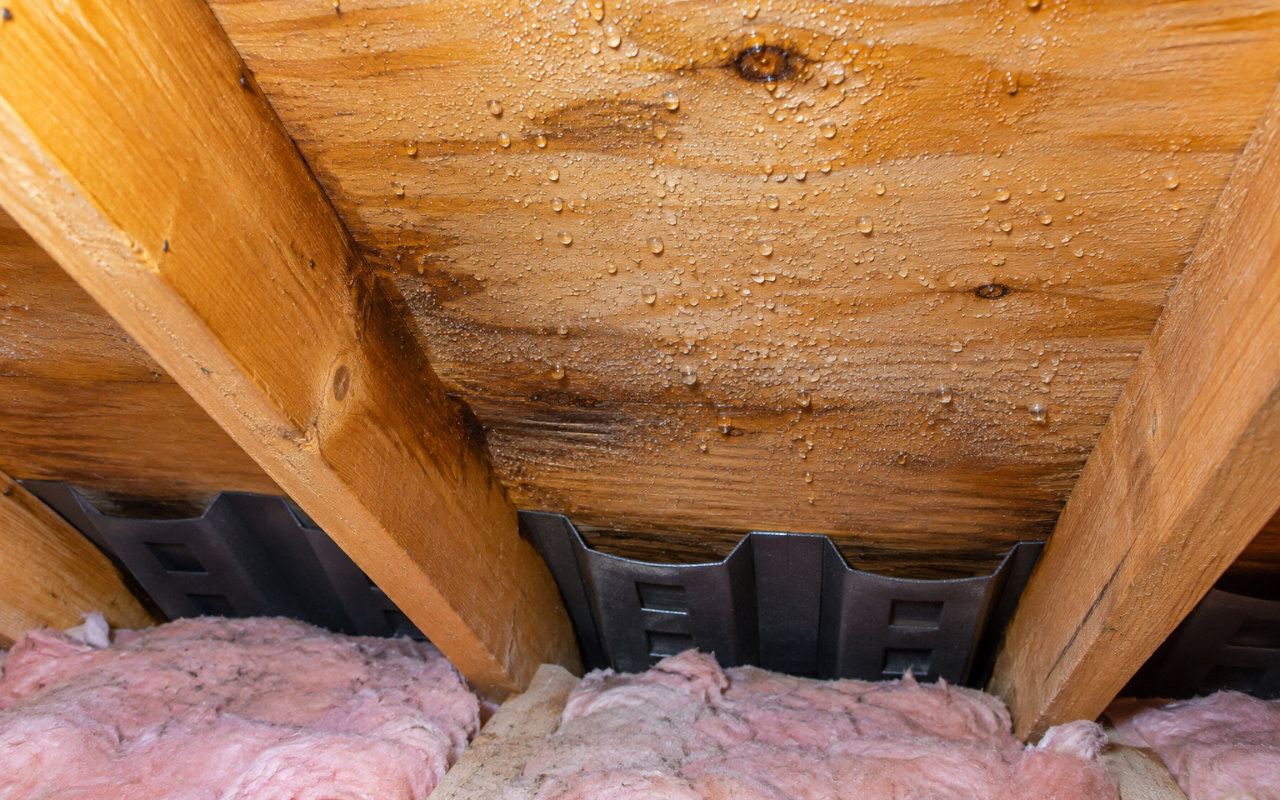
What Causes Roof Condensation in Attic Spaces During Winter?
Roof condensation in attic spaces happens when warm, moist air touches cold roof surfaces. As a result, water droplets or frost can form beneath the roof decking. Common causes include air leaks, poor insulation, blocked vents, and indoor humidity. Therefore, controlling moisture and improving airflow can reduce the risk of damage.
Recognize Early Attic Moisture Signs Before Damage Spreads Further
First, check for changes around the roof decking, rafters, and insulation. Although moisture may remain hidden, several warning signs can reveal developing problems.
- Water droplets beneath the roof decking
- Frost on rafters during cold weather
- Dark stains or damp wooden surfaces
- Wet, compressed, or damaged insulation
- Musty odors or visible mold growth
- Water stains on ceilings below the attic
However, these attic moisture signs do not always confirm condensation. Roof leaks can produce similar damage.
At Brothers Exterior Corp, we examine visible roof conditions and ventilation concerns before recommending repairs. Therefore, homeowners can better understand what their attic needs.
Understand Why Winter Attic Humidity Creates Hidden Roofing Problems
During winter, indoor heating keeps living spaces warmer than the attic. Meanwhile, cooking, showering, and laundry add moisture to household air.
When warm air escapes through ceiling gaps, it can reach cold roofing materials. Consequently, moisture collects as droplets or frost.
Several conditions can increase winter attic humidity:
- Poorly sealed attic access openings
- Bathroom exhaust fans venting into the attic
- Missing or uneven attic insulation
- Blocked soffit or ridge vents
- Excess indoor moisture from daily activities
Additionally, frost may melt when outdoor temperatures rise. Therefore, homeowners might suddenly notice dripping water without recent rainfall.
Because these conditions often work together, finding the actual moisture source is essential before choosing repairs.
Compare Condensation and Roof Leaks to Identify Moisture Sources
Understanding condensation vs roof leaks can help homeowners avoid unnecessary repairs. However, both problems require careful attention.
Condensation often appears across several cold attic surfaces. In contrast, a roof leak may create localized moisture near damaged roofing materials.
For example, wet areas after rainfall may suggest damaged shingles or flashing. Meanwhile, frost during freezing weather may suggest excess attic moisture.
Nevertheless, weather patterns alone cannot confirm the cause. Water can travel before leaving visible stains.
For additional guidance, explore our article about common causes of roof leaks. It explains how roofing damage can allow outside water to enter.
At Brothers Exterior Corp, we consider both possibilities when reviewing moisture concerns. As a result, we can discuss solutions based on the suspected source.
Improve Roof Ventilation to Reduce Trapped Attic Moisture
Proper airflow helps remove moisture from a traditionally vented attic. Therefore, a balanced ventilation system supports better roof conditions.
Generally, soffit vents allow outside air to enter near the roof edges. Meanwhile, ridge vents release air near the roof peak.
However, insulation or debris can block these openings. Consequently, damp air may remain trapped beneath the roof.
Our guide to common roof ventilation problems explains how blocked vents affect airflow.
Additionally, a professional roof ventilation service can examine intake openings, exhaust vents, and attic conditions.
At Brothers Exterior Corp, we review these connected parts before discussing improvements. After all, adding vents without correcting air leaks may leave moisture problems unresolved.
Follow Simple Prevention Steps to Keep Your Attic Drier
Fortunately, many moisture problems can be reduced through regular home maintenance. Start with safe observations and basic indoor moisture control.
How to reduce attic condensation safely
- First, inspect accessible attic areas for stains, frost, or moisture.
- Next, check whether visible soffit openings appear blocked.
- Then, confirm bathroom exhaust fans discharge outdoors.
- Also, look for insulation gaps around the attic entrance.
- Afterward, monitor indoor humidity during colder weather.
- Finally, request professional guidance when moisture returns.
Additionally, use kitchen and bathroom exhaust fans to reduce moisture indoors. Make sure clothes dryers also vent outdoors.
However, avoid walking on unsupported attic surfaces or disturbing electrical equipment. Instead, leave difficult inspections and roof work to trained professionals.
These simple habits can reduce moisture problems. Still, persistent condensation may require a closer inspection.
Choose Effective Attic Condensation Repair Methods for Lasting Protection
Successful attic condensation repair starts with identifying where moisture enters and why it remains trapped.
For example, sealing ceiling gaps can reduce warm air entering the attic. Meanwhile, correcting blocked vents can improve airflow.
Damaged insulation may also need replacement after the moisture source is corrected. However, the right approach depends on the roof design.
Some homes have sealed attic systems that require different moisture control methods. Therefore, adding ventilation is not always appropriate.
At Brothers Exterior Corp, we review visible roofing damage and ventilation conditions before discussing suitable next steps.
If moisture has weakened roofing materials, our roof repair and replacement guidance explains important factors homeowners should consider.
Most importantly, repairs should address the cause rather than simply cover existing stains.
Maintain Healthy Attic Conditions Through Regular Seasonal Inspections
Routine checks can reveal moisture before visible damage becomes severe. Therefore, inspect accessible attic areas during seasonal changes.
Pay special attention after freezing temperatures, heavy rain, or noticeable indoor humidity changes.
Additionally, monitor musty odors, damp insulation, and unusual ceiling stains. These changes may indicate a developing moisture problem.
Indoor humidity control also matters. During winter, lower indoor humidity may be necessary to prevent condensation on cold surfaces.
However, the ideal level depends on outdoor temperatures and home conditions. Therefore, avoid assuming one humidity setting works everywhere.
At Brothers Exterior Corp, you can discuss recurring warning signs before deciding on further roof work.
Protect Your Roof Investment by Addressing Condensation Problems Early
Ignoring attic moisture can lead to damaged insulation, mold growth, and weakened wooden roofing parts. Consequently, small moisture concerns may require more extensive repairs later.
However, early action can help protect your home. Proper diagnosis, moisture control, and suitable ventilation improvements work together.
At Brothers Exterior Corp, we believe homeowners deserve clear information about their roofing concerns. Therefore, we focus on identifying problems and discussing practical next steps.
If you notice recurring moisture or suspect hidden damage, share your attic moisture concerns with our team.
Ultimately, addressing roof condensation in attic spaces can help preserve roofing materials and support a healthier home environment.
Frequently Asked Questions
What causes condensation inside an attic during winter?
Warm indoor air can enter a cold attic through ceiling gaps. Consequently, moisture may collect on roof decking and rafters. Poor airflow can make the problem worse. Our guide explains how roof ventilation problems develop and affect attic conditions.
How can I tell condensation from a roof leak?
Condensation often develops during cold weather, while leaks may appear after rainfall. However, both can leave similar stains. Therefore, inspect roofing conditions before assuming the cause. Learn about possible sources of roof water leaks to understand the differences.
Can attic condensation damage my roof structure?
Yes, repeated moisture exposure can weaken wooden roofing materials and damage insulation. Additionally, damp conditions may encourage mold growth. However, early repairs can limit further deterioration. Explore our roof repair or replacement considerations when structural damage becomes a concern.
When should I request professional attic moisture help?
Request help when stains, frost, wet insulation, or musty odors keep returning. Also, seek guidance when the source remains unclear. At Brothers Exterior Corp, we can discuss your concerns when you reach our roofing team.
How can regular roof maintenance prevent attic moisture?
Regular inspections help identify blocked vents, damaged roofing materials, and early moisture signs. Additionally, checking your roof before seasonal changes can reveal developing problems. Our home roofing service information introduces our roofing work and available assistance.
References:
- Controlling Moisture Problems in Your Home — University of Minnesota Extension
- What Causes That Condensation on My Ceiling? — Popular Mechanics