
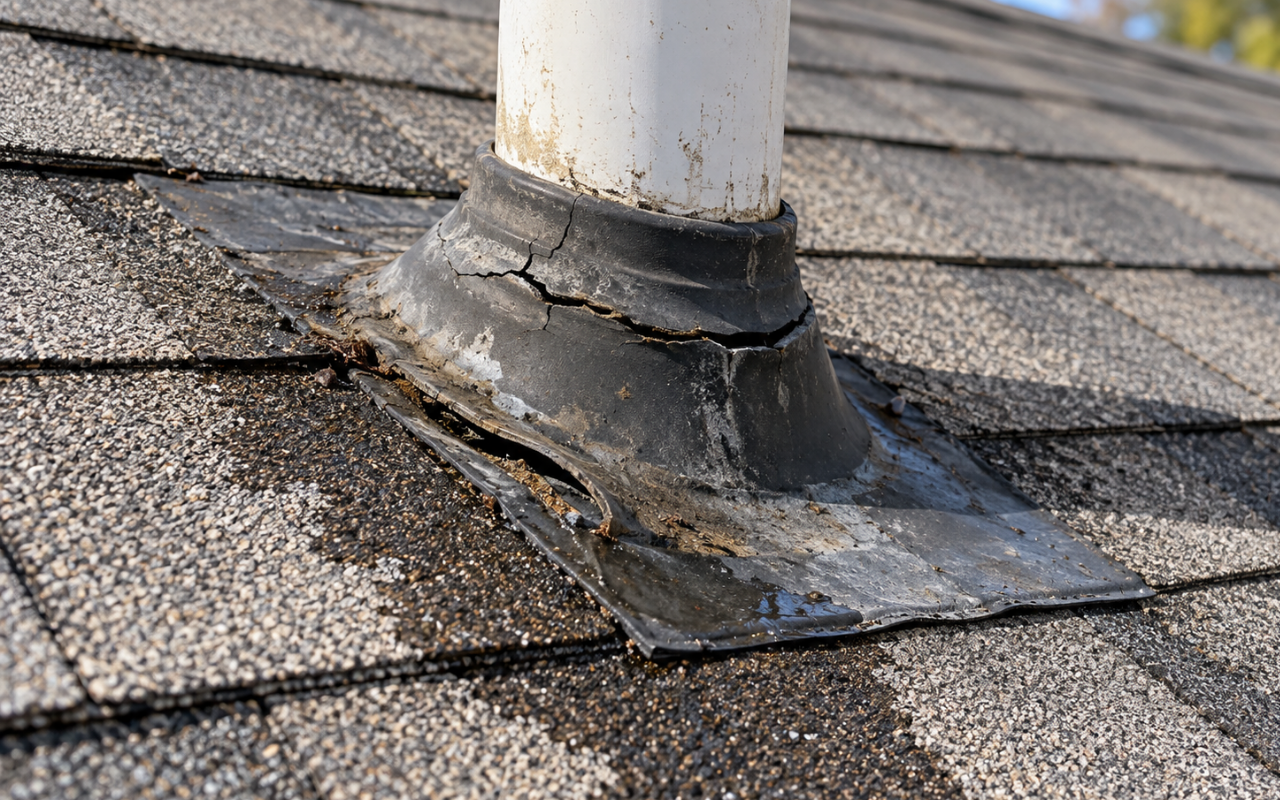
How Can You Fix a Roof Pipe Boot Leak?
A roof pipe boot leak can let rain enter around a plumbing vent and damage nearby materials. Fortunately, early signs can help you act before the problem spreads. At Brothers Exterior Corp, we explain what to look for, how repairs work, and when professional help makes the safer choice.
You can fix a roof pipe boot leak by finding the damaged seal, checking nearby roofing, replacing worn flashing, and sealing the new boot correctly. However, roof work carries fall risks. Therefore, homeowners should inspect from safe areas first and use professional help when access or damage is uncertain.
Spot Early Warning Signs Before Water Damage Spreads
First, look for ceiling stains, peeling paint, damp insulation, or musty attic smells. These cracked pipe boot signs often appear after steady rain. However, the visible stain may not sit directly below the opening. Water can travel along rafters before reaching drywall.
Next, listen for dripping during rain and inspect the attic with a flashlight. Also, check around the vent pipe for dark wood or wet insulation. A plumbing vent roof leak may begin with a small crack, yet repeated moisture can affect a larger area.
At Brothers Exterior Corp, we start by looking for the actual water path. Therefore, we recommend learning about the common causes of roof leaks before assuming the boot is the only problem.
- Ceiling rings or yellow-brown stains after rain
- Cracked rubber around the vent pipe collar
- Loose flashing or lifted shingles near the vent
- Damp attic insulation or darker roof decking
- Musty odors near the upper floor or attic
Prepare Safe Tools Before Starting Any Roof Work
Before any roof pipe boot repair, gather the right tools and check the weather. First, choose a calm, dry day. Next, place a sturdy ladder on stable ground. Also, wear work gloves, eye protection, non-slip shoes, and proper fall protection.
For the repair itself, you may need a flat pry bar, utility knife, hammer, roofing nails, sealant, and a caulking gun. Additionally, choose a replacement boot that matches the vent pipe size. Because materials vary, review the product instructions before installation.
However, do not climb onto a wet, icy, steep, or damaged roof. Instead, inspect from the ground or attic when conditions are unsafe. If you are unsure what you are seeing, share your roofing concern with our team before deciding on the next step.
- Check weather conditions before setting up a ladder.
- Keep tools organized so nothing rolls down the roof.
- Protect nearby shingles while lifting old flashing.
- Stop if the roof surface feels unstable or slippery.
Replace Damaged Boots Carefully for Better Water Protection
A proper repair starts by exposing the damaged boot without breaking sound shingles. First, gently lift the shingles around the flashing. Then, remove the fasteners holding the old piece. Afterward, cut old sealant carefully and slide the boot off the vent pipe.
Next, clean away loose cement, dirt, and debris. Also, inspect the vent pipe and roof deck. If the wood feels soft or looks rotted, the damage may extend beyond a simple roof pipe boot leak. In that case, stop and address the damaged decking before installing new flashing.
At Brothers Exterior Corp, we treat flashing as part of the water-control system. Therefore, our guide to lasting flashing protection explains why correct layering matters around roof openings.
- Lift nearby shingles gently and remove old fasteners.
- Slide the damaged boot off the vent pipe.
- Clean old sealant and inspect the deck below.
- Fit the new boot over the pipe securely.
- Place the upper flashing edge beneath higher shingles.
- Keep the lower edge above the shingles below.
- Secure the flashing without creating raised areas.
Seal New Flashing Correctly to Stop Future Leaks
After positioning the new boot, secure it so water flows over the flashing instead of beneath it. Next, seal required nail heads and approved joints with roofing-grade material. Also, press lifted shingles back into their proper position.
Then, check the collar around the vent pipe. A tight fit is important because the rubber can crack as it ages. Therefore, the pipe flashing lifespan depends on material quality, sun exposure, weather, and installation. No single service life applies to every roof.
With Brothers Exterior Corp, you get a complete review when the leak needs professional attention. Moreover, a professional roof repair evaluation can identify nearby damage that may not be visible from inside the home.
Finally, test only when it is safe. Instead of flooding one spot, apply water gradually from the lower area upward. Meanwhile, another person can watch the attic for moisture. If water appears again, stop the test and review the flashing placement.
Maintain Vent Areas Regularly to Extend Roof Life
Regular checks can reduce the chance of another leak. First, inspect visible vent areas during spring and fall. Also, look again after strong wind, heavy rain, or falling branches. Because small gaps can grow, early attention can limit interior damage.
At Brothers Exterior Corp, we encourage homeowners to keep debris away from roof openings. Therefore, remove leaves and small branches from safe locations. Also, trim nearby limbs that can strike the roof. Our seasonal roof maintenance guidance covers practical checks for changing weather.
- Review vent boots for cracks, gaps, or separation.
- Check ceilings and attic areas after heavy rain.
- Keep nearby drainage paths clear of loose debris.
- Watch for lifted shingles around roof penetrations.
- Arrange a roof leak repair service when damage is unclear.
Moreover, do not assume fresh sealant always solves the cause. A worn boot, loose flashing, damaged shingles, or weak decking may need different work. Therefore, careful inspection should come before the repair decision.
Frequently Asked Questions
What causes a pipe boot to start leaking?
Usually, sun, weather, age, movement, or poor installation weakens the rubber seal. As a result, small cracks can let rain enter. For broader context, review our overview of common leak sources.
Can cracked vent flashing damage the roof deck?
Yes. If water keeps entering, nearby wood and insulation may stay damp. Therefore, early roof pipe boot repair can limit wider damage. Our flashing care and repair guide explains related warning signs.
When does a leaking vent need urgent help?
If water is actively entering during a storm, protect the interior first. Then, avoid unsafe roof access. For urgent conditions, see our urgent roofing response information for practical next steps.
How often should roof vent areas be checked?
Generally, check visible roof areas at least twice each year and after severe weather. However, never walk on unsafe roofing. Our seasonal inspection checklist for homeowners offers a simple review process.
When should a homeowner call a roofing professional?
Call when the leak source is unclear, access is unsafe, or nearby materials show damage. At Brothers Exterior Corp, we can explain suitable next steps. You can also review our complete exterior service options before reaching out.
Protect Your Home by Acting Before Leaks Grow
A roof pipe boot leak often starts small, yet repeated rain can spread moisture into nearby materials. Therefore, watch for early signs, keep vent areas clear, and repair failed components correctly. At Brothers Exterior Corp, we focus on finding the cause before recommending work. As a result, you can make a clearer decision and protect your home with confidence.
References:
- A Brief Guide to Mold, Moisture and Your Home — U.S. Environmental Protection Agency
- Prevent Construction Falls from Roofs, Ladders, and Scaffolds — CDC/NIOSH